Rooted in community, farmers markets continue to grow
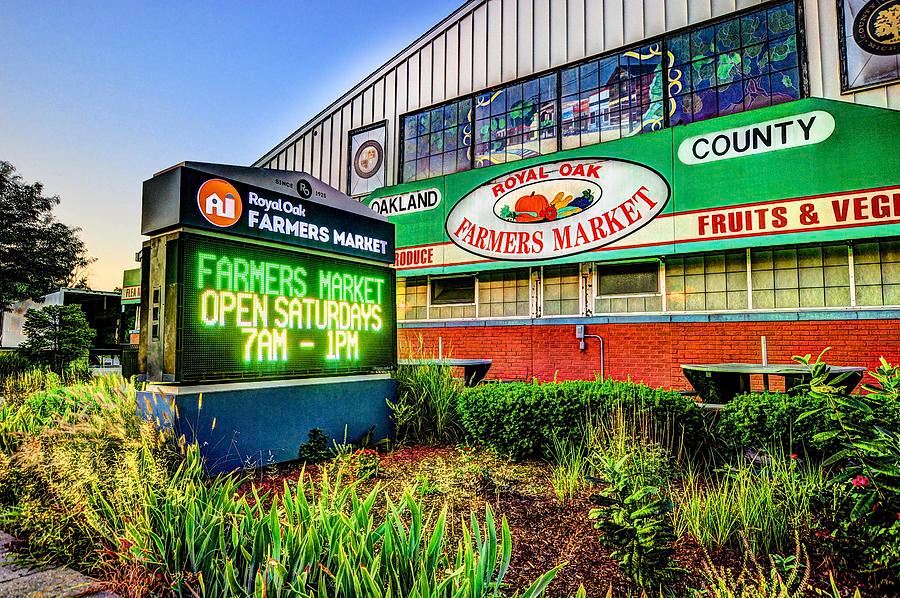
Courtesy photo by Capital News Service Royal Oak Farmers Market
LANSING – One of the earliest memories Courtney Prielipp has of visiting farmers markets is her family’s corner stall, where she ran around and watched her brother play with toy tractors.
“I probably want to say I was 2 or 3 when I was going to the farmers market,” said Prielipp, now a 22-year-old Eastern Michigan University student. “A lot of the vendors, and even the customers, remember me when I was little, and they ask me how school is.”
Nationally, farmers markets are growing rapidly. The U.S. Department of Agriculture reported 2,863 markets in 2000, with that number rising to more than 8,700 in 2025.
In Michigan alone, more than 200 markets offer amenities for patrons, including fresh produce and special events.
Events can range from performances by local musicians, such as Dixboro’s Music at the Market, to pet adoption events like the St. Clair Shores Farmer’s Market Adoption Event, said Kelly Baldwin, a nurse from Westland and a regular patron.
Small markets such as the Manistique Farmers Market in the Upper Peninsula can host between nine and 30 vendors, while large markets like Detroit’s Eastern Market can feature more than 56, according to the Michigan Farmers’ Market Association.
The organization’s 2020 state census collected data about farmers markets during the COVID-19 pandemic and represents the most recent available information on vendor demographics.
The next state census won’t take place in 2026 because a nationwide census is conducted annually, said Amanda Shreve, the association’s executive director.
Shreve said the organization hopes to conduct another census in the future, but doesn’t know when.
Holt Farmers Market manager Chuck Grinnell says vendor selection varies by season.
“We go from about 18 to 20 vendors in the winter to 30 to 35 [in warmer months], depending on the day and the time of the year,” Grinnell said, adding that some vendors sell at multiple markets each week.
The owners of Hilltop Green House and Farms in Ann Arbor, Ken and Denise Prielipp, rely on Courtney and her siblings to help grow greens, including spinach, lettuce, kale, mizuna and other lettuces.
The Prielipp family also has 300 laying hens that require egg collection. The family farm has sold at farmers markets since the mid-1970s, participating in markets across Southeast Michigan.
During the season, Ken and Denise split the work, with Denise handling more greenhouse duties and Ken taking on heavier labor, such as harvesting crops.
Because of the greenhouse, they can sell products year-round. Still, they make a point of serving the same community members they’ve supported for years.
“We always went up to markets – Oakland County market, Northville, Plymouth, Royal Oak, Ann Arbor – we just did markets everywhere we could,” Ken said.
Ken and Denise are usually up at 3:30 a.m. every Saturday preparing to “go to market.” Courtney said the schedule is exhausting for her parents, but the work has to be done.
“I would much rather go to a farmers market, where maybe some of the prices are a bit more expensive,” Courtney said. “But it’s supporting a family, a local business, and I’d probably get more health benefits from it.”
Ken remembers the faces of the patrons he and his family serve, highlighting an “entwined community” in which vendors and customers exchange stories and get to know one another.
“We have people who come every week,” Ken said. “If we don’t go, they get disappointed. It’s kind of a commitment.”
Shreve said farmers markets best support their communities when they reflect the groups and people located in them. She also mentioned operating sustainability.
For Grinnell, his market began in 2008 when he purchased a former fire station and converted it into a farmers market.
Although only one original producer remains from the market’s early days, Grinnell now works primarily with “urban farmers” who make up the majority of his vendors.
“What I’ve concentrated on is the smaller people who have big plots in their backyard, and I call them my urban farmers,” Grinnell said. “They bring a lot of really nice quality produce and stuff to the market every year because they have the time and they put that personal touch onto it.”
Shreve agreed: “Being representative of the community is key; when your neighbors are the ones selling at the market, it feels more inclusive.”
Baldwin says she enjoys visiting farmers markets with her family, especially “date days” with her husband Scott.
“We like going to Eastern Market because it’s so lively and there’s so many people. They have many different vendors you can see,” Baldwin said.
Grinnell plans to open another building to double the size of Holt’s farmers market, creating additional opportunities to teach the public about cooking through a demonstration kitchen, nutrition, food preservation and more.
It is unclear which educational programs will be offered at Holt Farmers Market because the building remains under construction. Grinnell said he is in talks with individuals, such as a nutritionist, who could help lead various programs.
“Once this new building is done, we are going to add a second day of market and we will also be starting a lot of different educational programs,” Grinnell said.
Lily Cole writes for Great Lakes Echo.
Local News

Montmorency County police update

Alpena County seeking candidates for animal control officer
Getting skilled trades classes back in schools crucial to fixing shortages
Rooted in community, farmers markets continue to grow

The Easter Bunny visits Alpena