Food banks take heavy hit from soaring gas prices
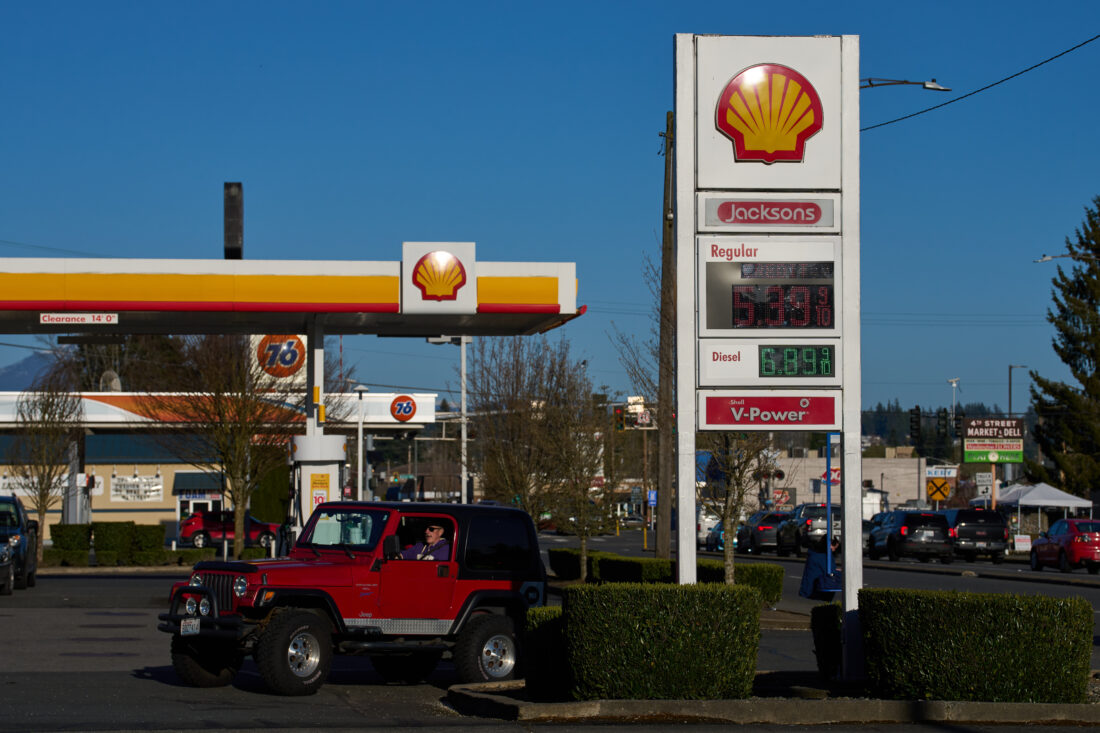
AP file photo Higher gasoline prices are seen at a Shell gas station a half-mile from the Tulalip Indian Reservation on Wednesday.
LANSING – Michigan residents are paying just over $4 per gallon of gas on average, up from $2.70 in January, according to AAA.
And, that’s led to increased demand for assistance and increased transportation costs for food banks statewide.
Britany Marcia is a secretary at Jackson Giving Back to the Community, a nonprofit that provides food, hygiene products and other essentials to Jackson residents.
The organization travels an hour each way twice a month to pick up food from the South Michigan Food Bank in Battle Creek.
Marcia said that’s made providing other services more difficult.
“With our baby items, as far as our diapers, wipes, formula, clothing, we have had to switch from distributing every week to every two weeks,” Marcia said.
She said the organization is struggling to keep up with food distribution.
“With so much of the funding going toward gas and with inflation, we’re not able to keep up with the food program as much.”
That isn’t only because it spends more on gas, Marcia said. Rather, it is seeing increased demand for all services, including food.
“We’re having such an increase in volume of people due to the gas prices that we’re running out of food in a couple of hours,” Marcia said. “We’re going through thousands and thousands of pounds of food.”
That makes it especially hard for Jackson Giving Back to the Community as a nonprofit, Marcia said.
“We’re donation and grant-based,” she said. “Our founder tries to self-fund as much as she can of it, but everybody is struggling right now.”
Michael Shafer is the director of Family Impact Centers, a food bank in Fowlerville that primarily serves Livingston, Ingham and Shiawassee counties. He said the community is seeing the same struggles.
“Families are already choosing between groceries and utility bills,” Shafer said. “We’re seeing situations where even coming to the pantry is a burden.”
Shafer said the pantry has done its best to prepare for economic crises.
“We try not to be surprised by what’s going on in the economy,” he said. “Right now we have resources, we have partnerships, we have the infrastructure in place to continue serving those families very well.”
Shafer said that regardless of those assets, gas prices do affect the pantry’s operations.
“As a nonprofit providing free grocery assistance, we can’t just add a delivery fee onto that program,” Shafer said. “Those increased costs come straight out of our operating budget.”
Most of its funding comes from local donors, according to Shafer.
Shafer said he thinks increased gas prices can be even more difficult in rural communities like Fowlerville.
“People are already driving farther for work, for their groceries and even to get gas,” Shafer said. “Gas is actually 45 cents more expensive in Fowlerville and in rural Ingham County than in Lansing.”
Shafer said he has seen the effects firsthand from a Fowlerville resident who earns her income through DoorDash.
“Not only is it affecting her access to food, but it’s also affecting her income and her way of living,” he said.
Michigan News
Food banks take heavy hit from soaring gas prices

Cheboygan County River levels remain steady; agencies ask people to prepare for emergency

Nessel highlights initiatives, resources for survivors during sexual assault awareness month
State Emergency Operations Center activated in response to rising water levels at Cheboygan Dam
CHEBOYGAN — Governor Gretchen Whitmer activated the State Emergency Operations Center (SEOC) Friday due to rising ...

Chamber leads fundraising for Alpena fireworks