
Cheboygan, dam and lock threatened, Alpena’s remain strong
Rain this weekend could add to flooding threat
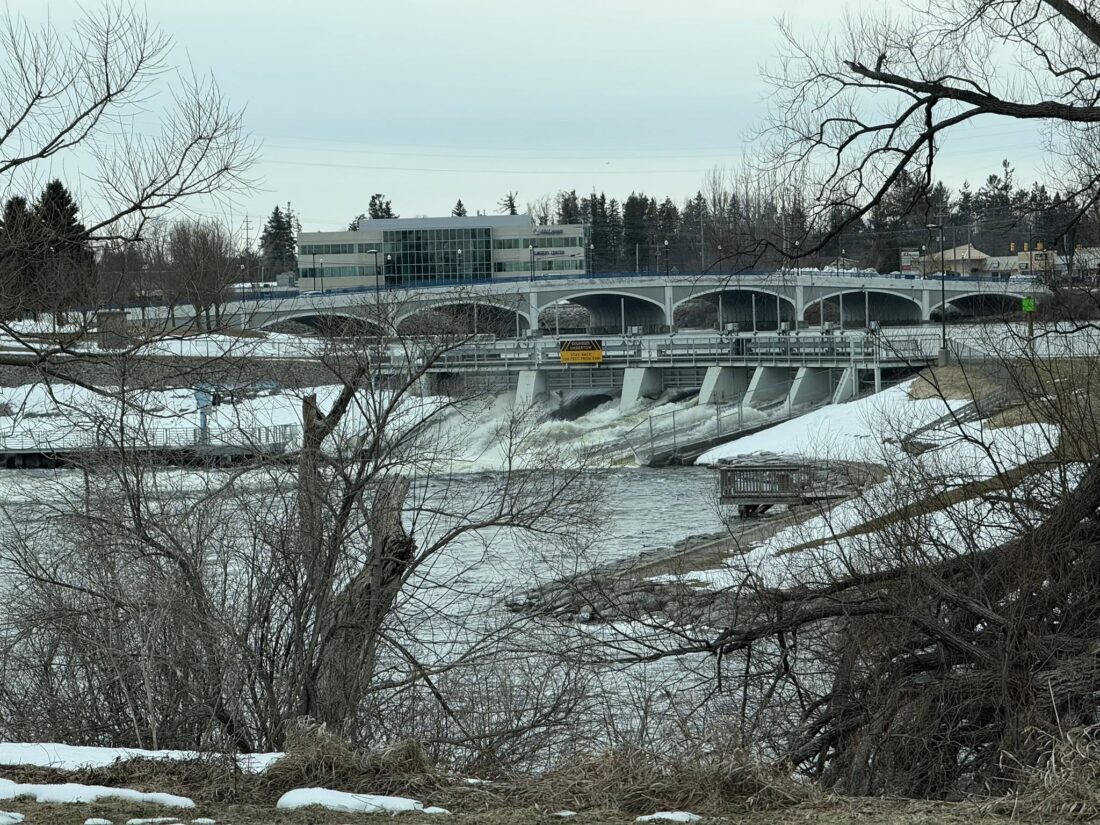
Courtesy photo Rising water levels are causing concern that the dam in Cheboygan could be breached. A nearby lock is also being threatened.
ALPENA — There is a plan in place if water levels on the Thunder Bay River rise too high, Alpena County Emergency Manager Nick Modrzynski said.
In Cheboyan however, rising water levels are making local and state officials uneasy about possible flooding or infrastructure damage.
On Friday, Gov. Gretchen Whitmer activated the State Emergency Operations Center (SEOC) due to rising water levels at the Cheboygan Lock and Dam Complex on the Cheboygan River, according to a press release from the Michigan State Police. The river had risen to 18 inches below the top of the Cheboygan Dam at the time the press release was sent out. If water levels reach 12 inches below the crest of the dam, the response will expand to include additional public safety measures.
There is more rain in the forecast and snow on the ground in Cheboygan that could complicate the matter in the coming days.
“The residual effect of the storm we had is putting a lot of pressure on the dam,” State Rep. Cam Cavitt , R-Cheboygan, said.
There is currently no concern about the Thunder Bay River flooding at this time, Grace Phillips, regional manager at Eagle Creek Renewable Energy, said.
Phillips manages the Seven Mile, Four Mile, and 9th Avenue dams in Alpena County.
Modrzynski said that Phillips notifies him if water levels are high or if a high volume of water is going through the dams.
Eagle Creek sends the county their flood plans, which were recently renewed after he took over as emergency manager.
He will be having a meeting in a couple of weeks with Eagle Creek to go over some stuff on their end, he said.
The water has been lowering and has plateaued right now.
Modrzynski said a few days ago the water was pretty close to the top edge on the Chisholm bridge by the old Big Boy, and now it’s at least a foot down from where it was.
The heavy rainfall predicted on Sunday will change the water levels on the river. Any precipitation or lack thereof will cause fluctuation in the river’s water level, Phillips said.
She explained how the dams are managed when there are high water levels.
“First you need to understand there are six dams on the Thunder Bay River, and each one has different capacities,” Phillips said. “We have a Federal Energy Regulatory Commission (FERC) license that gives us an operating range, whether it’s dialing the units up or opening the spill gates.”
The generating units produce power inside the power houses at each dam. The spill gates are opened to let water through. The number of open spill gates depends on the water level.
“Part of our FERC license is we have what is called the run of river mode, what comes into the dam goes back out, so if you have a 1000 cubic feet per second (cfs) come in you have 1000 cfs go out,” Phillips said.
The condition of dams across the state are a cause for concern, Cavitt said. Dams are typically used to produce energy or control lake levels.
“The Michigan Department of Natural Resources (DNR) has got a lot of money to take dams out but not a lot to fix them,” he said.
A lot of the ones that are not producing power people are wanting to take out, Cavitt said. The cost of maintaining dams outweighs the amount of energy they produce. However, taking out dams could potentially change the landscape and the way Michigan looks, he added.
Local News
RC school board meets Monday
ROGERS CITY — The Rogers City Area Schools Board of Education is having its regular monthly meeting on Monday at ...

April is Child Abuse Prevention Month

From ruin to recovery

Angela Soltysiak takes the helm of the Brown Trout Festival

Friends of Plaza pool to host euchre tournament
State Emergency Operations Center activated in response to rising water levels at Cheboygan Dam
CHEBOYGAN — Governor Gretchen Whitmer activated the State Emergency Operations Center (SEOC) Friday due to rising ...