Wildlife stamps aim to improve conservation across the Great Lakes region
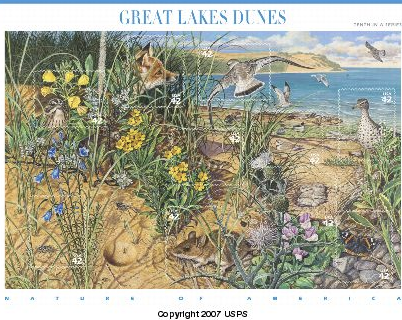
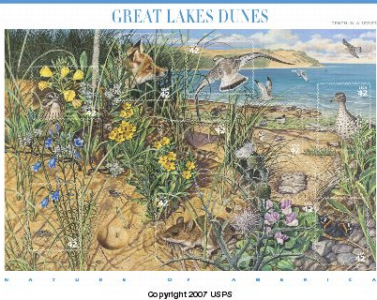
Courtesy photo of a Michigan wildlife stamp.
LANSING — Postage stamps featuring wildlife are helping fund conservation and bring awareness to communities about habitat protection throughout the Great Lakes region by centering species like the wood duck, wild turkey and piping plover.
The stamps showcase wildlife artwork and are used as licenses for bird hunting, while also granting a free annual pass to national wildlife refuges.
The programs and agencies behind them were established to promote habitat restoration, support conservation research and encourage public involvement in protecting wildlife.
Alissa Kakatsch, an assistant game bird specialist with the Wisconsin Department of Natural Resources, explained how the stamps play an important part in funding conservation work for birds such as wild turkeys, pheasant and waterfowl.
“Turkey and pheasant funding can be used for habitats specifically related to turkeys or pheasant, but then they can also be used for research and education projects as well,” Kakatsch said.
The funding also supports partnerships between conservation groups and government agencies.
Across Lake Michigan in Michigan, conservation groups use the wildlife stamps to introduce people to the region’s biodiversity.
Don Burlett, who served as president of Oakland Bird Alliance for 18 years, spoke of the variety of species captured on the Michigan dunes stamp.
“When you actually do a little research, it claims 27 species in just that one picture for the 2008 stamp,” Burlett said.
The design included animals commonly found in the region, including piping plovers, red foxes and spotted sandpipers, along with plants and insects.
“And only if you pay attention do you notice that they’re all there,” Burlett said.
The Oakland Bird Alliance works with partners to support conservation and public education, including county agencies and private companies that manage land for wildlife habitats.
“It’s all continuously trying to educate the public on what’s going on,” Burlett said.
Kakatsch said, “Our waterfowl work is a lot of wetland water, which will affect a lot of other species far beyond just ducks and geese here in Wisconsin.”
Habitat work funded by the stamps can support ecosystems beyond the target species.
He said restoration projects funded through the programs can improve landscapes used by a variety of wildlife, meaning that efforts designed for game birds frequently benefit other birds and animals that share the same environments.
In Ohio, Department of Natural Resources communications manager Brian Plasters said featuring different species on wildlife stamps highlights the diversity of birds found in the state.
“People like to see different species on the stamp,” Plasters said. “When it changes each year, people look forward to seeing what’s on it.”
The Ohio DNR partners with Ducks Unlimited for the Ohio Wetlands Habitat Stamp to pay for wetland conservation in Ohio and the broader Great Lakes region.
Looking ahead, Plasters said continued participation from hunters and outdoor recreationists helps support conservation funding.
Plasters said protecting habitat remains an important focus for conservation in Ohio.
Ensuring that wetlands and other natural areas remain available for birds to nest and raise their young is an ongoing priority across the region, he said.
“We have a loyal group of hunters who are passionate about what they do,” Plasters said. “That helps make sure these activities continue and stay funded.”
Local News
Urgent Needs Fund Grants available to nonprofits serving Alcona, Alpena, and Ogemaw counties
Bizarre snow formation

Big gaps found in prenatal care in Michigan, including Alcona, Presque Isle
Wildlife stamps aim to improve conservation across the Great Lakes region
FEMA announces public assistance for Michigan utilities for 2025 ice storm