Bill to make the governor and legislators FOIA eligible stalls
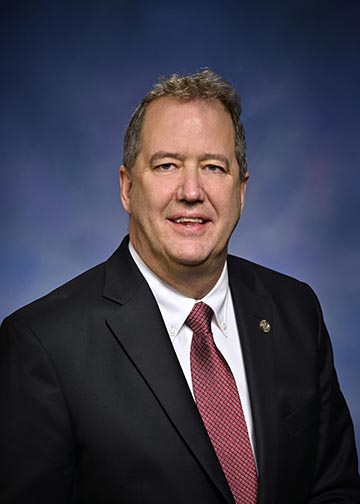
Cam Cavitt
LANSING — In January of 2025, the Michigan Senate passed a bill that would include both the governor and state legislatures in Freedom of Information Act (FOIA) requests. The legislation is sponsored by Sens. Jeremy Moss (D-Bloomfield) and Ed McBroom (R-Vulcan).
Despite support from both republicans and democrats the bill remains held up by State Speaker Matt Hall.
Although most elected officials are subject to FOIA, the governor and legislators are exempt, despite pleas from media and citizens to change the current law.
In a poll published by the Michigan Press Association, 89% of voters support a ballot initiative to change the law if the legislature fails to act. The legislation would allow FOIA requests for records from the governor, and state legislators.
State Rep. Cam Cavitt said he supports the legislation but added that there are some flaws regarding how the bill would be implemented.
“We need to put more transparency and bring light onto the state government,” Cavitt said. “If I could play devil’s advocate regarding some of the concerns I have, I would still move forward, but it’s going to be expensive.”
“A lot of legislatures use their personal phones, so we would have to get state phones, because everything would be FOIA eligible,” Cavitt explained. “I would not use that phone if it meant the general public could have access to my personal communication,” Cavitt added.
One of Cavitt’s concerns is the fees associated with FOIA requests.
“Sometimes it frustrates me how expensive FOIA is, it seems like there are arbitrary rates, I think we would need a standard rate,” Cavitt said. “If you are going to make it FOIA eligible, let’s make it affordable.”
Instead of moving forward with the FOIA initiative, Hall introduced alternative legislation known as Hall Ethics, Accountability, and Transparency (HEAT) plan which focuses on holding politicians accountable for their use of dark money to increase transparency in spending.
“What HEAT does is that every legislator who wants a spending request or what we call Legislatively Directed Spending Items (LSDI) must have a sponsor,” Cavitt said. “Let’s say the mayor wants a recycling center here, which they do, I have to attach my name to an LSDI, which I did, and say I think this is a good idea for my community and then we have to have a public hearing.”
State Senator Michele Hoitenga discussed her thoughts on including the governor and state legislators in FOIA requests.
“I have consistently supported opening FOIA up to legislators and the governor’s office,” Hoitenga said. “It is absolutely necessary to restore transparency and trust back into the Michigan government.”
Michigan law requires public meeting notices to be published in a qualified newspaper of general circulation, often governed by Public Act 247 of 1963 and the Open Meetings Act. Hoitenga explained her position regarding leaving the legislation as it is pertaining to the publication of meetings or making modifications.
“Each term I have served, a bill to end mandatory publishing in local newspapers has been introduced but failed to reach the governor,” Hoitenga said. “We all want our local newspapers to thrive, yet we must acknowledge that technology can render some practices unnecessary.”
“I support the mandate of municipalities publishing meeting notices, but this can often be done on their websites instead of in print,” Hoitenga added. “If a municipality lacks a website, then newspaper publication is necessary.”
Michigan consistently ranks among the worst states in the U.S. for government transparency, frequently appearing in the bottom few states or ranking 48th to 50th in various reports.
“Ultimately, transparency is the priority, and access to information must be ensured one way or another,” Hoitenga said.
Local News

Area fishing report

Hello Sun!

Jimmie Garant’s Party Store supports the military

Arbuckle, convicted of second-degree murder to be resentenced

Michigan’s main cause of wolf mortality? People