Alpena received higher than normal snowfall in February
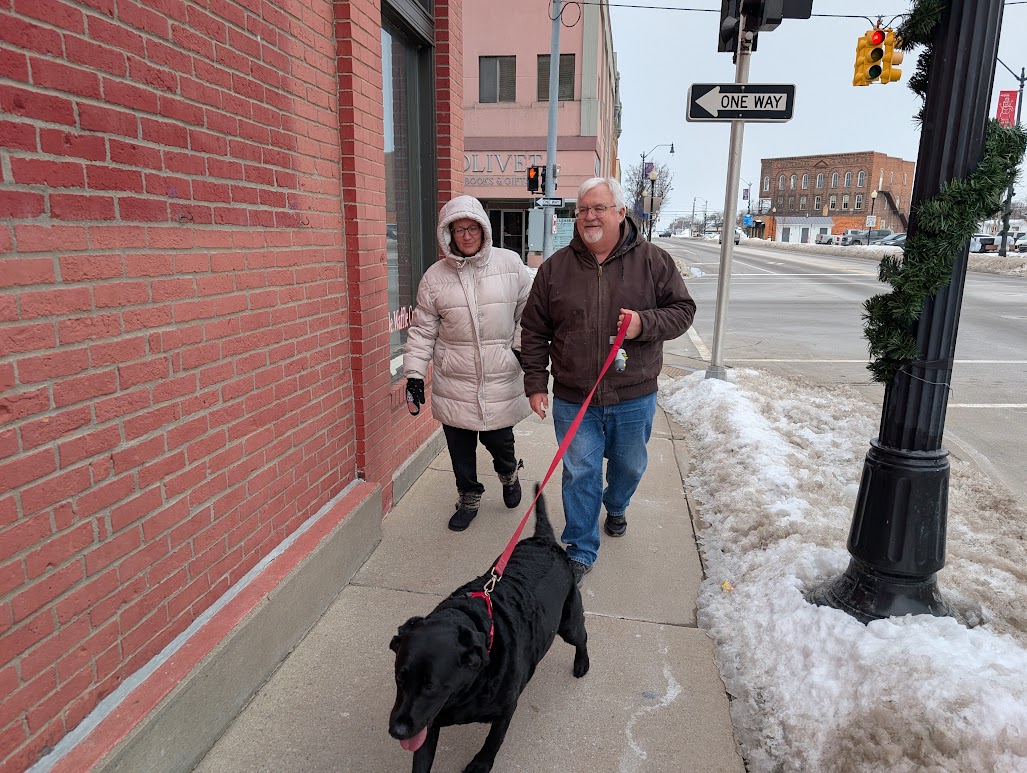
News Photo by Reagan Voetberg A couple walks their dog on Sunday in downtown Alpena.
ALPENA — Alpena received higher than normal precipitation and snowfall in the month of February, according to the National Weather Service.
According to the National Weather Service, 22.3 inches of new snow fell through the course of the month. The snow on the ground reached a maximum depth of 20 inches on Feb. 23.
The average amount of snowfall for February is 17 inches.
There were 2.48 inches of precipitation throughout the month, which is almost an inch more than the normal 1.52 inches for February.
The snowiest day was Feb. 22 when snowfall reached 5.4 inches.
The highest amount of precipitation fell on Feb. 20 at 0.89 inches.
February reached its coldest temperature, -14 degrees, on Feb. 8, and its warmest temperature, 45 degrees, on Saturday.
The average high temperature was slightly colder than the normal at 29.6 degrees. The normal average high in February is 30.2 degrees. The average low temperature was one degree warmer than the normal, at 12.4 degrees. That brought the overall average temperature to 21 degrees, which is about the same as the normal 20.7 degrees for February.
Lead Meteorologist Michael Boguth of the National Weather Service in Gaylord described February as a very active month in terms of the weather.
Overall, while there was higher than normal snowfall and precipitation, those numbers are not considered extreme, Boguth said. They lie within the broader range of normal.
The heavy snow in February was caused by an Alberta clipper, which is a fast-moving, low-pressure system that comes northerly from Canada. That weather system brings some snow with it, but much of the snow in Alpena was caused by that clipper creating lake-effect snow over the open waters of Lake Huron.
Warmer temperatures towards the end of February were caused by a flip in that clipper.
“We started to get more southerly winds instead of northerly,” Boguth said.
The arctic air was pushed out by a pacific-dominated air mass that stretched across the country, he said. That pattern is expected to continue for the next couple of weeks, meaning warmer weather, with highs in the 40s, even reaching 50, and possibly some rain. Much of the snow pack will likely melt in that time.
Boguth said the odds of another severe ice storm like Northeast Michigan received last year at the end of March are “astronomical.” Although the outlook could change and that event was a rare, once-in-a-lifetime storm.
Reagan Voetberg. News Staff Writer. rvoetberg@TheAlpenaNews.com.
Local News
Snowmobile race in Lincoln
Alpena received higher than normal snowfall in February
Alcona County police update
Recent actions taken by law enforcement agencies in Northeast Michigan. This has been only lightly edited. ALCONA ...

Gov. Whitmer proclaims March 2026 as March is Reading Month

Trapping is necessary for management of wildlife populations