
Michigan receives less funding for rural healthcare
Cavitt says southeast Michigan is not rural, deserved less funding
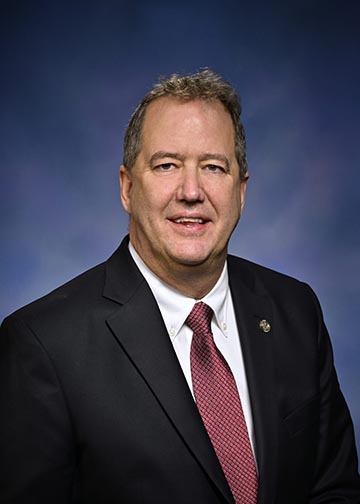
Cam Cavitt
ALPENA — Healthcare authorities and state representatives have recently criticized the Michigan Department of Health and Human Services (MDHHS) for botching its request for funding through the Rural Health Transformation (RHT) program, established under the Donald Trump Administration’s One Big Beautiful Bill Act.
According to a Michigan House Republicans press release from January, the RHT program was established to improve healthcare access and outcomes in rural communities across the country. States applied for a share of $10 billion in federal funding, distributed annually.
Though Michigan is ranked among the top 10 states with rural population, Michigan only received $173.1 million, placing it in the bottom ten states nationwide to receive funding.
According to the release, neighboring states such as Iowa, $209 million, and Ohio, $202 million, secured more funding, respectively.
Michigan House Representative Cam Cavitt, R-Cheboygan, said that MDHHS’ request was “flawed from the beginning.”
Cavitt explained that MDHHS’ is using the term “partially rural” to allocate funding to areas such as Oakland County and Wayne County.
“The fact that they would think that Wayne County and Oakland County are considered rural when you’re never more than 20 minutes from a world-class hospital in any of those counties,” Cavitt said. “And we’ve got counties up in Northeast Michigan that don’t have neonatal care … so that was very offensive to me, that term.”
“We’re surrounded by rural, surrounded by rural, surrounded by rural, surrounded by rural,” he added.
Cavitt stated that he believes that the way that MDHHS has handled the RHT funding request and allocation should be considered “malfeasance.”
He added that he is concerned that the way MDHHS is allocating RHT funding is not compliant with the intentions of the Trump Administration.
RHT funding was meant to cushion cuts made to Medicaid under the One Big Beautiful Bill.
“What if the Trump Administration finds out we gave money to Henry Ford in Detroit when that money is supposed to be for rural areas?” he asked. “They could ask to claw back money or they could maybe not qualify us as high next time we have an application in.”
Cavitt added that he believes that Northeast Michigan will see a ripple effect from the lack of funding.
“There’s a big difference between $215 and $173 million, especially when you’re spending it in rural areas,” he said. “It has a multiplier effect.”
At the February Northeast Michigan Community Mental Health Authority (NeMCMH) monthly meeting, Nena Sork, NeMCMH executive director, also commented on the lack of funding coming to Northeast Michigan from the RHT program.
“We got the bottom 10 in funding because they thought they were going to be able to reorganize this, I believe,” Sork said. “That’s just my assumption.”
Sork explained that when calculating population estimates for its request to the federal government, “they took all the water out … so then they make the density of the population greater.”
“So Grand Traverse and Leelalau and Wayne and Oakland are going to get this money,” she added. “Benzie is now a micro-urban area … when you take out all the water, you quadruple the people, even though nobody’s living in that water.”
Sork said that MDHHS used this specific designation model to ensure that Wayne and Oakland counties, for example, received funding.
“Because Wayne has 100 acres of rural area … they became a rural community,” she added.
Kayla Wikaryasz can be reached at 989-358-5688 or kwikaryasz@TheAlpenaNews.com.
Local News
Alpena Township Fire Department navigating staffing issues

AAA warns drivers: winter road salt can cause hidden vehicle damage

St. Paw-trick’s Day at Go Fetch Pet Supply
Alcona enters five-year contract to house inmates in Alpena
Cribbage league donates to the senior center
Murder and Mayhem: Alcona’s Historical Crimes
HARRISVILLE — The Alcona Historical Society is offering their second 2026 Cabin Fever Lecture series presentation ...