Huron Humane Society requests additional funds from Alpena
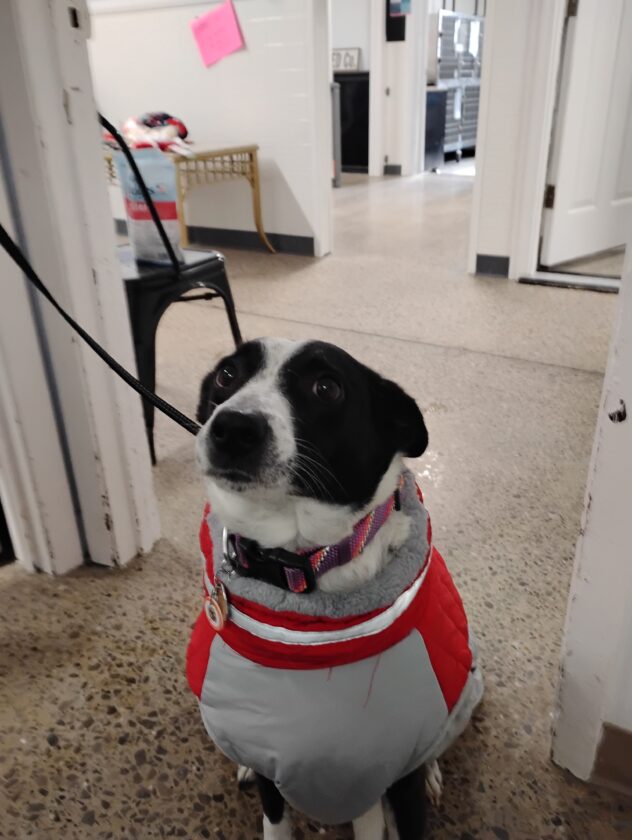
News photo by Josh Jambor. A dog named Perdita from the Huron Humane Society poses for a picture on Monday afternoon. Changes to the minimum wage and higher expenses have impacted the local shelters finances.
ALPENA – The Huron Humane Society housed fewer animals last year than in 2024, but the cost of operations increased due to the increase in minimum wage and the new earned Sicktime Act (ESTA).
Currently, the annual service contract between HHS and the City of Alpena is for $22,500, but the shelter is requesting the Alpena Municipal Council consider a slight increase to $25,000.
The request is also in response to rising supply costs.
Michigan’s minimum wage climbed from $12.48 last year to $13.73 at the beginning of 2026.
The ESTA requires employers to provide paid sick leave to employees, allowing them to accrue 1 hour of paid time for every 30 hours worked. It covers most employees in Michigan, including hourly, salaried, part-time, and student workers, allowing up to 72 hours of use per year.”
In 2025, HHS cared for a total of 359 animals throughout the year. Of those animals, 316 were cats, and 43 of them were dogs.
Many of the animals found homes, as 40 dogs and 295 cats were successfully adopted and found new families.
In comparison, in 2024, HHS cared for 429 animals. Of those animals, 56 were dogs and 373 cats. Of that, 53 of those dogs, and 352 cats were adopted out.
Cindy Johnson, Huron Humane Society president, discussed the changes and how it might affect HHS.
“Earned Sick Time Act and minimum wage are a hardship on all small non-profits,” Johnson said. “HHS believes people need to earn a decent wage and be allowed to have paid time off. This comes at a cost; we all have to live within our means. We have to figure out what that looks like, again this year.”
With the support of Alpena’s government, 335 animals were tested, treated, vaccinated, sterilized, and placed into new homes in 2025.
The efforts of HHS helps to reduce animal overpopulation, nuisance complaints, and long-term shelter costs.
On average, the length of stay for dogs at HHS was six days. By comparison, cats averaged a stay of 38 days.
The ice storm last year also had a significant impact on the shelter, its finances, and operations.
The shelter experienced a loss of power, heat, and water due to the storm. The property HHS occupies flooded, limiting safe access to animals. Additionally, HHS was without phones and internet for over a month, which severely disrupted operations.
Johnson discussed the ice storm and the challenges she and her staff faced in 2025.
“Last year was difficult. Like everyone else who went through the ice storm, we had special challenges being in charge of a shelter full of animals,” Johnson said. “Learning to pivot daily was essential.”
When Johnson was asked about her hopes for HHS in 2026, she said the goals are the same as always.
“To focus on rescuing animals and collaborating with other agencies to help humans and animals stay together,” she said.
The council received the presentation from HHS on Monday and the request will be considered when council and staff begin the next fiscal budget, which runs from July 1 to June 30.
Local News

Business Expo and book sale on Saturday
Youth Volunteer Corps donate to Friends Together
Huron Humane Society requests additional funds from Alpena
Snack time in Posen

A path through time: The Alpena Bi-Path