Changes to Northeast Michigan Catholic churches
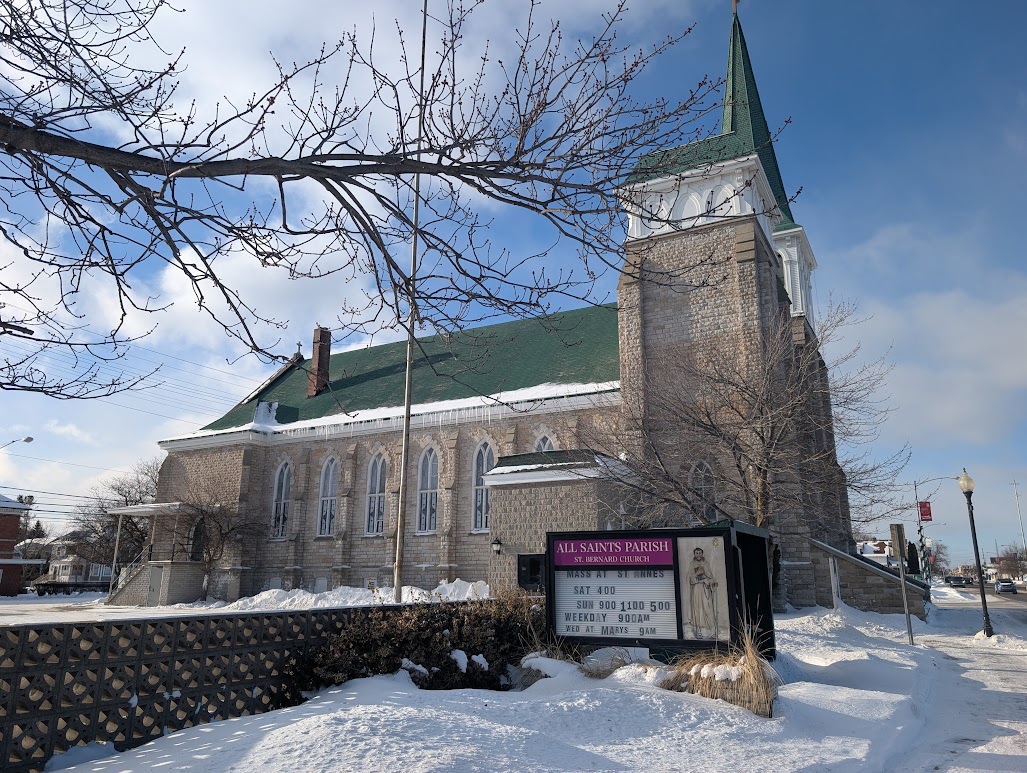
News Photo by Reagan Voetberg St. Bernard Church, one of Alpena All Saints Parish’s four church properties, is pictured. All Saints will be forming a cluster with St. Catherine Parish of Ossineke and St. Gabriel Parish of Black River when the Diocese of Gaylord 2026 pastoral plan takes full effect in July.
ALPENA — Changes are coming to Northeast Michigan Catholic churches since the release of the 2026 pastoral plan by the Diocese of Gaylord on Tuesday.
The diocese is comprised of all the Catholic Parishes across northern lower Michigan under the spiritual leadership and administrative authority of Bishop Jeffrey Walsh.
The pastoral plan will take full effect in July, with a transition period until then.
Under the plan, All Saints Parish in Alpena will form a cluster with St. Catherine Parish in Ossineke. St. Gabriel Parish in Black River will also be added to the cluster as a limited use parish.
Limited-use parishes will be available for events like baptisms and weddings.
St. Ignatius of Loyola Parish will form a cluster with St. Casimir Parish in Posen and St. Dominic Parish in Metz. St. Dominic’s will be designated as limited use.
Jesus the Good Shepherd Parish in Atlanta will be closing permanently.
St. Anne Parish in Harrisville and St. Raphael Parish in Mikado will be in a cluster with Sacred Heart Parish in Oscoda. St. Raphael Parish will be designated limited use.
St. Paul Parish in Onaway will be in a cluster with Cross in the Woods National Catholic Shrine in Indian River and St. Monica Parish in Afton.
“For more than a year, the clergy, parish leaders and lay faithful have been working with me on the pastoral plan for our diocese,” Walsh said in the pastoral plan document. “The guiding theme of our diocesan pastoral planning was the ‘2025 Jubilee Year of Hope.’ As a Church, we are Pilgrims of Hope.”
“Now, as we begin the implementation of this diocesan pastoral plan in July 2026, the guiding theme will be ‘love, communion and mission,'” he said.
The plan seeks to address issues including clergy availability, finances, geography, seasonal shifts, parish vibrancy, and clergy wellness.
A downward trend in the number of priests in the diocese has been an issue since at least 2009, according to a long range recommendations report created by a diocesan task force.
“There were large numbers of priests who were ordained after World War II,” that document states. “Those men are now nearing retirement age without enough seminarians being formed to replace them.”
That recommendation report was consulted during the creation of the pastoral plan. With the number of priests still trending downwards, changes are necessary.
“You will notice in this pastoral plan, in addition to the changes with parish clusters, changes of personnel,” Walsh said in the pastoral plan. “It is understood that change will bring some anxiety, sadness, and perhaps anger. In the time of transition from February to July 2026, resources and help will be available. At the spiritual level, let us ask God for an increase of patience, understanding, and kindness.”
“With this plan, I believe we will be in a better position to meet pastoral needs and enrich the lives of our clergy by reducing the number of parishes from 73 to 56–decreasing the burden for most priests and parish leaders with minimized clusters–and adding international and other priests in roles of support,” Walsh said in the plan.
Reagan Voetberg can be reached at 989-358-5683 or rvoetberg@TheAlpenaNews.com.
Local News

Alpena Township Fire Department understaffed
Changes to Northeast Michigan Catholic churches

Thunder Bay National Marine Sanctuary hosts annual film festival

Prue promoted to equity partner at accounting firm
Culligan Plaza change in restroom hours
Due to recent vandalism, the Culligan Plaza public restrooms will have reduced hours of 9 a.m. to 8 p.m., effective ...