AAA warns drivers to prep vehicles and plan ahead for safety
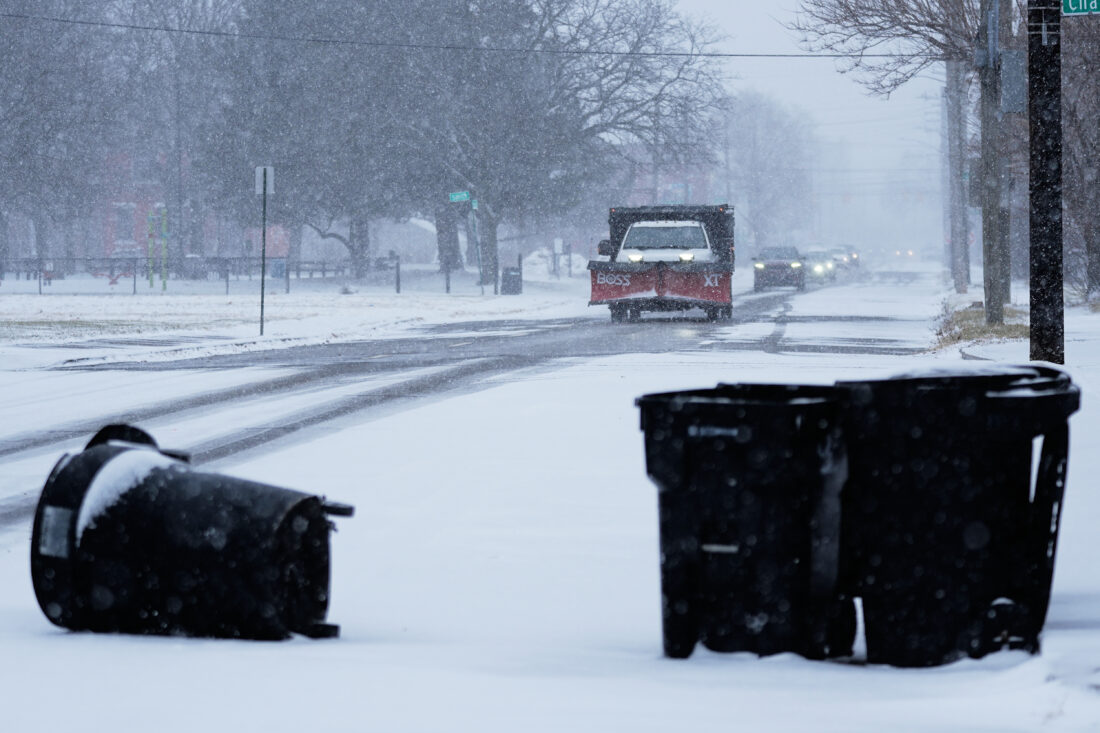
Turned over garbage cans are seen as a snowplow drives after a winter storm system hit South East Michigan, Monday, Dec. 29, 2025, in Detroit . (AP Photo/Ryan Sun)
MICHIGAN — In a press release on Wednesday, the AAA – The Auto Club Group (AAA) urged drivers to take proactive steps to stay safe on winter roads.
AAA cited the U.S. Department of Transportation, which reports that each year 1,300 people are killed and 116,000 are injured in crashes on snowy or icy pavement.
“Winter driving hazards such as slick ice, snow-packed roads, and reduced traction make braking and steering treacherous,” Adrienne Woodland, spokeswoman for AAA, said in the release, “Speeding, tailgating, and poorly maintained vehicles amplify the danger, so prepping your car with winter tires, a strong battery, and proper fluid levels is essential for safety.”
AAA’s winter vehicle maintenance checklist includes the following:
— Tires: Check pressure weekly; consider winter tires.
— Battery: Test regularly; cold weather reduces power.
— Fluids: Use winter-grade washer fluid; check antifreeze; change oil for winter viscosity.
— Wipers & Defroster: Replace blades; ensure heater works.
— Brakes & Lights: Inspect brakes; clean and check all lights.
Primary reasons why drivers seek roadside assistance in winter weather include dead batteries, tire issues, vehicle crashes/sliding off the road, running out of fuel, or frozen locks, according to AAA.
Dead batteries
Cold weather reduces a car battery’s power output and efficiency. A battery that works fine in warm weather may fail completely when temperatures drop, making a jump-start or a replacement battery more common.
Tire issues
Icy and snowy road conditions require good tire traction and the tread needs to be able to effectively push snow and grip wet/icy surfaces to steer and propel a vehicle. Drivers should check their tires’ tread depth to see if replacement tires are needed.
Vehicle crashes/sliding off the road
Reduced traction from ice increases the risk of skidding, sliding off the road, or crashes.
Running out of fuel
Being stranded without fuel in freezing temperatures can become an emergency and drivers should not let their gas tanks drop below a quarter of a tank in inclement weather.
Car lockouts and frozen locks
Freezing moisture can cause car locks to freeze, preventing access to the vehicle.
What to do if you become stranded
If a vehicle becomes disabled in winter weather, AAA suggests staying inside the vehicle for shelter unless it is unsafe to do so. Drivers should turn on hazard lights to increase visibility and call for help and share their GPS location.
AAA also suggests that drivers should run the engine sparingly (about 10 minutes per hour) and crack a window for ventilation.
“If your car stalls in traffic, act fast: turn on hazard lights, set the emergency brake, stay inside with doors locked, and call for roadside assistance immediately,” Woodland said in the release. “If remaining in your vehicle puts you at risk, such as on a blind curve or in heavy traffic, exit carefully, move to a safe location away from the roadway, and call for assistance immediately.”
Michigan News

Cavitt criticizes MDHHS for plans to divert rural healthcare funds to urban counties

Bergman helps ACC acquire $3.5 million for innovation center
AAA warns drivers to prep vehicles and plan ahead for safety

U.S. Senate, Peters, pass bipartisan funding bill to help protect Great Lakes
100 vehicles pile up in Michigan crash as snowstorm moves across the country