
Senator Peters shares 2025 accomplishments, including those for Alpena
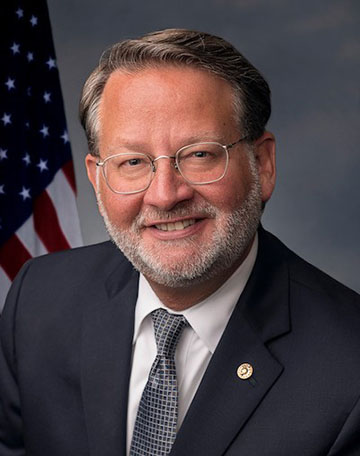
U.S. Sen. Gary Peters
WASHINGTON, DC – In 2025, U.S. Senator Gary Peters, Michigan, continued fighting to deliver bipartisan, commonsense solutions to strengthen communities across Michigan. Despite being in the minority party, Peters successfully advanced and passed numerous bipartisan bills, and secured wins that will have a positive impact for Michiganders for years to come.
This includes the major announcement that Selfridge Air National Guard Base will receive an F-15EX fighter jet mission, as well as the enactment of numerous Peters-led bills to expand opioid addiction treatment for young adults, protect burial benefits for military families, and continue to invest in safeguarding the Great Lakes ecosystem.
“Fighting for Michiganders will always be my top priority in Congress, and I’m proud of the progress we made on issues important to our state,” said Peters. “Throughout my entire career, I’ve always found the best way to get things done is by reaching across the aisle and finding common ground. As we look to next year, I’m going to continue honoring that commitment by partnering with anyone willing to roll up their sleeves and help improve the lives of Michiganders, whether that’s protecting health care benefits, supporting American manufacturing, or lowering prices for working families.”
Below is a recap of Senator Peters’ key accomplishments and efforts in 2025:
Securing investments in Michigan’s military facilities and defense sector
In April, Peters welcomed the announcement that Selfridge Air National Guard Base would receive a squadron of 21 F-15EXs – a next-generation fighter aircraft. This announcement followed years of advocacy and efforts by Peters to secure a new fighter mission for Selfridge and protect the future of the base. This announcement came after Peters announced last year that Selfridge will receive a squadron of KC-46A aircraft tankers. Following the announcement of the new fighter mission, Peters advocated for continued investment at Selfridge Air National Guard Base to support basing of the F-15EX fighters, as well as the KC-46A tankers.
Helped craft and pass annual National Defense Bill
In December, Peters secured several provisions and major funding wins in the annual national defense bill. This bill includes numerous provisions secured and authored by Peters to strengthen our national security and support Michigan’s military assets, including:
Funding to support Selfridge as it prepares for its new missions. This includes $9 million for runway improvements, $5.2 million for two new taxiways, and a provision prohibiting the early retirement of the Selfridge A-10 mission. To further support long-term success at Selfridge, Peters fought for and secured language protecting the 107th Fighter Squadron at Selfridge and their A-10 Warthog fighters from potential early retirement before Selfridge accepts a new squadron of F-15EX fighters.
The bill also includes provisions to support the Camp Grayling All-Domain Warfighting Training Complex (ADWTC) and the annual Northern Strike Exercise, which is the country’s largest all-domain reserve forces exercise.
Peters also worked to secure language directing the Air Force to move forward with initial full-scale production of Collaborative Combat Aircraft (CCA).
Peters also worked to address PFAS contamination across Michigan, including at military bases. Peters helped include a provision in this bill that requires DOD to develop a PFAS remediation acceleration strategy and submit a report to Congress that details the criteria that the Department uses to prioritize response actions, timelines for completing each phase of the cleanup process, a plan for deploying additional resources to reduce delays in remediation efforts, and standards for evaluating performance. The provision also requires DOD to publish – on a public online dashboard – up-to-date PFAS cleanup data, funding, timelines, and community points of contact for each and every military installation and National Guard facility where efforts are planned or underway.
Strengthening homeland security and government transparency
Peters authored a bipartisan bill passed by the Senate that would make it easier for disaster survivors to access federal help. The Disaster Assistance Simplification Act would require the Federal Emergency Management Agency (FEMA) to develop a universal application across federal agencies for disaster survivors seeking federal assistance from hurricanes, floods, wildfires, and other natural disasters. This legislation would significantly help streamline this process and reduce the burden placed on disaster survivors in need of immediate assistance.
In February, following consistent advocacy from Peters, the U.S. Postal Service announced the Iron Mountain Processing and Distribution Center would continue its local mail processing operations. Peters repeatedly pushed back on proposed consolidation of the USPS delivery network, including for the Iron Mountain facility, that would have significantly impacted mail service for Upper Peninsula residents. Prior to the announcement, Peters secured a pause on proposed changes at the Iron Mountain Mail Processing and Distribution Center until USPS leadership could ensure the changes would not impact local mail service. Peters has long led oversight efforts to protect mail delivery for the Upper Peninsula, including convening a hearing with USPS officials to examine proposed changes to its delivery network and sending a letter to Postmaster General DeJoy in February 2024 requesting further details into changes at the Iron Mountain Processing Center.
The Senate unanimously passed Peters’ bipartisan legislation that would prevent taxpayer dollars from being spent in error on payments to deceased Americans. Specifically, the bill provides the Department of Treasury with permanent access to Social Security Administration databases of individuals who have died, which has proven successful for identifying erroneous payments.
Protecting the Great Lakes
The Senate and House of Representatives passed bipartisan legislation introduced by Peters to bolster support for Great Lakes Fishery research and management efforts. The Great Lakes Fisheries Research Reauthorization Act would reauthorize funding for the U.S. Geological Survey’s (USGS) Great Lakes Science Center for another five years, helping to ensure that they are able to continue conducting critical research that supports Great Lakes fisheries.
Peters again led the effort to extend federal funding and protections for the Great Lakes. Peters introduced the Great Lakes Restoration Initiative Act of 2025 to reauthorize the Great Lakes Restoration Initiative (GLRI) through 2031 and increase the program’s annual funding levels from $475 million to $500 million. Peters also helped secure funding for the GLRI through the Fiscal Year 2026 Interior, Environment, and Related Agencies Appropriations Act. The GLRI is the most significant investment ever made to restore and protect our Great Lakes.
Peters also worked to support American veterans and their families through a series of bills, as well as helped pass legislation to improve workforce development and manufacturing.
Assisting Michigan communities during natural disasters and improving federal preparedness and response
In March, an historic ice storm hit communities across Northern Michigan and the eastern Upper Peninsula. The National Weather Service ranked it one of the most significant ice storms ever recorded in Northern Michigan, causing an estimated $137 million in immediate response costs. In the immediate aftermath, Peters led the effort in coordination with the state and federal government to get aid to the region. The lawmakers worked in a bipartisan way to get President Trump and Small Business Administrator Kelly Loeffler to approve a Major Disaster Declaration and SBA assistance for the region and bring much needed aid into the region. Although the President approved some disaster aid in July, the lawmakers again came together in August to further push the Administration to provide aid for public utilities, individual residents, and hazard mitigation.
In response to widespread power outages caused by the ice storm, Peters introduced the bipartisan Preventing Power Outages Act, which would strengthen the resiliency of power grids in Michigan and across the country. The bill would reauthorize two U.S. Department of Energy grant programs that help states and utilities invest in modernizing their grid infrastructure to help ensure that the power stays on even during extreme weather and natural disasters. The bill would ensure that sufficient funding goes to states whose grids are least reliable and require the most investment, like Michigan.
Peters has already announced that he does not intend to seek another term when it expires at the end of 2026.
National News
Senator Peters shares 2025 accomplishments, including those for Alpena
Federal judge upholds Hawaii’s new climate change tax on cruise passengers
New storm hitting waterlogged Southern California could cause more flooding and mudslides
Bergman uses bipartisan support help veterans with spinal cord injuries
California drivers warned to reconsider Christmas travel plans ahead of storms
Santa Anita postpones opening day due to significant rainstorm in the forecast
ARCADIA, Calif. (AP) — Santa Anita is postponing the opening day of its 89th winter racing season by two days ...