A path through time: The Alpena Bi-Path
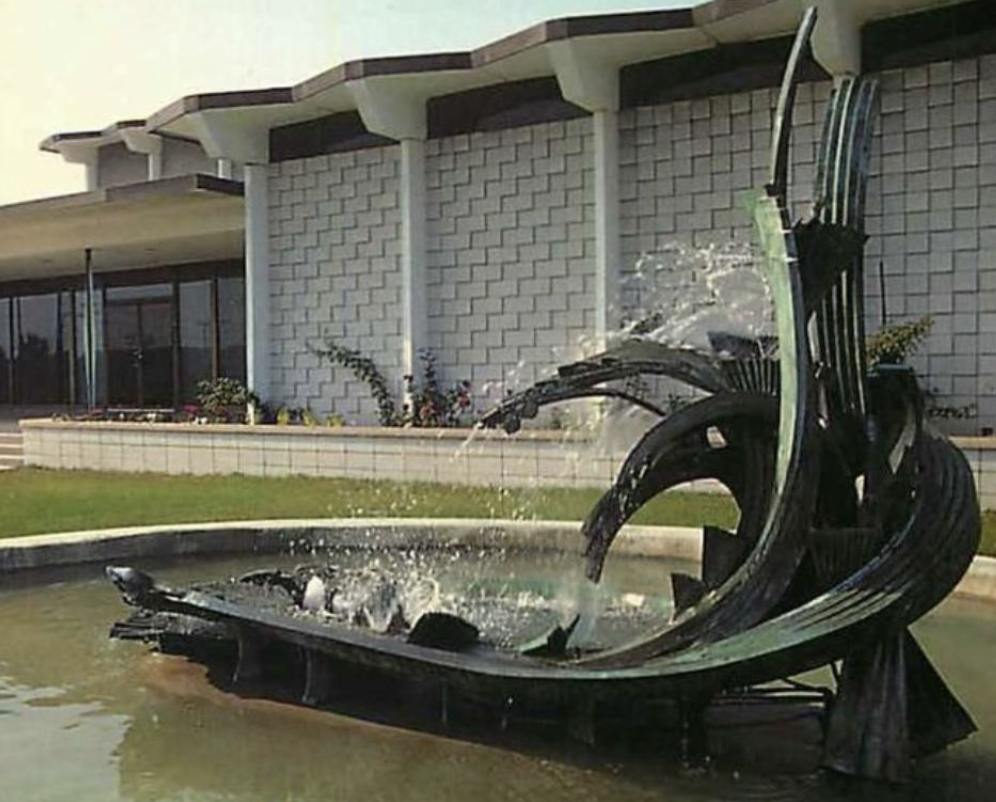
Courtesy photo The bronze statue in the fountain in front of the The Besser Museum for Northeast Michigan was the first sculpture on the Pi-Path in 1979.
Alpena marks a milestone in 2026: the 50th anniversary of the Alpena Bi-Path. This cause for celebration is about a legacy of community engagement and continued added value at the very heart of our town. The Bi-Path has witnessed daily routines and memorable moments, morning walks, family bike rides, school projects, community events, the flags of honor, and quiet personal reflection. Thousands of footsteps and tire tracks have worn its surface.
As communities across the nation prepare to mark the 250th anniversary of the Declaration of Independence in 2026, it is worth pausing, and not just for a moment. There are a series of reasons, because of what it all means, remembering that our Bi-Path is part of both our local and national experience at this momentous point in history.
Over time, the Bi-Path has become a gathering space, an informal classroom, and an outdoor gallery of sorts. Memorials, historical artifacts, sculptures, and murals have been added over the decades through collaboration among civic organizations, volunteers, artists, donors, and citizen patriots. As the path has expanded, these elements have helped define a shared sense of place.
The Alpena Sculptured Bikeway/Walkway–now widely known as the Alpena Bi-Path–was conceived during the lead-up to the United States Bicentennial celebrations in 1976. In May 1974, as communities considered how best to commemorate the nation’s 200th anniversary, the Thunder Bay Arts Council began discussing a project that would be permanent rather than symbolic, forward-looking but not fleeting.
Several ideas were considered before the Council settled on a sculptured walkway and bicycle path along the Thunder Bay River. A dedicated subcommittee was formed, bringing together expertise in the arts, history, law, and public relations. Recognizing the scale and complexity of the undertaking, the committee engaged Professor Peter Pollack, a landscape architect from the University of Michigan. Through aerial photography and on-site analysis, Pollack designed a route that harmonized with the natural landscape, addressed construction and easement challenges, and accommodated future expansion.
The plan envisioned a people-centered space: an eight-foot-wide, gently winding path accommodating both walkers and cyclists, stretching roughly 2.5 miles from the shores of Bay View Park, through town, along the river, and to the wildlife sanctuary at Duck Park. Along the route, small gathering areas would feature trees, benches, bike racks, and sculptures–spaces designed for rest, interaction, and reflection.
Construction was a genuine community effort. Volunteers and students participating in government programs, working under skilled supervisors, contributed their labor, while local officials oversaw key phases. Ken Apsey of the Alpena County Road Commission agreed to oversee the construction of the path. Funding was equally collaborative. The estimated $225,000 cost–covering concrete work, landscaping, sculpture, labor, and design–was met through major grants from the Michigan Council for the Arts and the Michigan Bicentennial Commission, as well as substantial support from service organizations, businesses, institutions, and individual donors. On June 30, 1975, the Alpena City Council unanimously accepted ownership of the Bi-Path and committed to its long-term maintenance, securing its future as a public asset.
Even the name emerged from public participation. Local elementary school students submitted more than 700 suggestions, from which “Bi-Path” was selected–capturing both the Bicentennial spirit and the dual purpose of walking and biking. The story goes that “Police Officer Russell Mainville, who oversaw the public schools’ bicycle safety program, sent hundreds of questionnaires to the elementary schools in the area asking the students to choose a name for the path and give reasons for their choice. Over seven hundred entries were turned in. Three students from Lincoln School won with their choice of ‘BiPath’, bi representing bicentennial and bicycle” (Alpena Sculptured Bikeway/Walkway: A Bicentennial Project of Thunder Bay Arts Council, Alpena, Michigan).
Today, the Bi-Path stands as a living legacy of the Bicentennial era–an example of how meaningful civic engagement invests in the future while honoring legacies of the past. Rather than being a static monument or one-time event, the Alpena Sculptured Bikeway/Walkway was envisioned as an evolving public space that continues to exhibit community engagement, investment, and pride still today.
The vision of a sculptured path took form in 1978 with the installation of the sculpture titled “Sculptured Fountain” at the Besser Museum, the first major public artwork on the path. While the addition of large-scale sculptures ceased for years afterward, the pathway itself continued to expand. Memorials, historical markers, and monuments were added over time, and the emphasis on large-scale public sculpture returned with renewed energy in recent years. Today, the Bi-Path spans nearly 18.5 miles, providing barrier-free access to waterfront parks and trails linking recreational, cultural, commercial, and civic sites throughout Alpena.
In 2017, the public sculpture vision for the original Bi-Path was formally revived through the Art Vision Alpena project of Thunder Bay Arts Council, a collaborative effort involving numerous philanthropic and volunteer organizations, government agencies, businesses, and individual patrons. Since then, new sculptures have been installed along the Bi-Path, creating focal points for conversation and cultural engagement by encouraging recreation with art in nature. Among several sculptures, recent works include “Departure of the Great Blue Herons” and “Global Collaboration Awareness” (2017), the multi-piece “History of Industry” series (2018), “Water in Limestone” (2022), and “Health & Wellness: A Tribute to Service and Giving” (2024). Two new sculptures will be added this summer, commemorating the nation’s Sestercentennial and marking the end of this project’s series.
The 50th Anniversary of the Alpena Bi-Path, in the context of our nation’s 250th celebrations, is an opportunity to pause and reflect on the meaning of the path’s origin and all that is entailed with its development over time.
To honor this shared history, a year-long interpretive series, beginning with this installment, will highlight the path and the various installations along its way. Each installment of this series will focus on a specific sculpture, marker, or artifact along the Bi-Path and highlight its meaning. Some pieces commemorate historical figures or events; others reflect artistic experimentation and civic generosity. Together, they form a collection that is uniquely Alpena.
Readers may rediscover familiar landmarks or uncover stories they never knew existed just beyond their daily routes. In doing so, the series underscores a central lesson of both the Bi-Path and the American experiment itself: democracy and community are not self-sustaining. They require investment, care, and engagement from a whole host of contributions and across generations.
As Alpena looks ahead to the Bi-Path’s 50th and the 250th anniversary of our nation’s independence, this series will explore the stories embedded along the path–one chapter, one sculpture, one monument, and/or memorial at a time. In celebrating our Bi-Path, we also celebrate the civic spirit that created it and continues to sustain it, reminding us of the paths we travel and the places we share.
A Sculptured Bi-Path Tour & Scrabble booklet by Thunder Bay Arts Council documents more than 60 installations along the Alpena Bi-Path. It encourages residents and visitors, families and friends alike, to explore art in nature through an interactive feature – a word scramble. Visit www.thunderbayarts.org for an electronic copy of the Bi-Path booklet and a copy of the original Alpena Sculptured Bikeway/Walkway plan.
Local News

Business Expo and book sale on Saturday

Youth Volunteer Corps donate to Friends Together

Huron Humane Society requests additional funds from Alpena
Snack time in Posen
A path through time: The Alpena Bi-Path