
Inland salt marshes threatened by invasive plants, study says
Trending
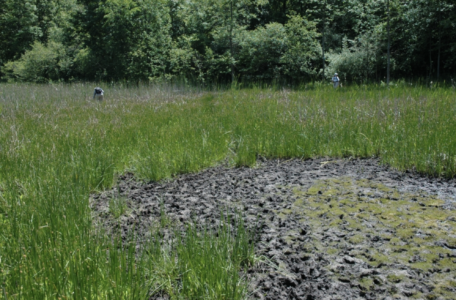
LANSING - Invasive plants are threatening Michigan's rare inland salt marsh ecosystems, according to a recent study in the Journal of Biodiversity and Conservation.
These inland salt marshes are formed in "non-arid regions when mineral soil is infiltrated by salt-saturated groundwater that rises to the surface in natural saltwater springs or seeps," the study said.
"A lot of rare species that aren't found in other places live there because of how salty they are. Only certain species can tolerate the high levels of salinity," said Shane Lishawa, a senior research associate at Loyola University of Chicago's School of Environmental Sustainability.
The geographic regions where these marshes are found are listed on the Michigan Natural Features Inventory website.
Lishawa, a co-author of the study, said the two main invaders at Michigan's endangered marshes are cattails and invasive canary grass.
"They are very predominant, so once they're established, the plants can develop dense clones that shade out some of the native plants," he said.
The spread of these invasive plants is continuing quickly, according to Lishawa.
"Some people documented as much as 4 meters in diameter of a clone, which is around 4 meters a year, so it can be a pretty rapid expansion. Not only the plants but the grass carries seeds that can form clones underground too, which can spread quickly across any landscape," he said.
Additionally, the overall health of the ecosystems has changed considerably as the invasions continued, including alterations in the salinity of the soil.
"Overall, at the sites from the study, the soil is no longer supporting rare species, and while restoration is possible, it would take a significant effort to restore those threatened species," he said.
The species at risk include dwarf spike-rush, Olney's bulrush and the Blanding's turtle.
Lishawa also said that the Hubbard site in the Maple River State Game Area in Clinton County, where some of the research took place, was nicknamed the "Hubbard salt lick." That's because mammals need salt, so the marshes concentrate a lot of deer traffic when they come to lick the salt.
Targeted management and monitoring at the site "is important for wildlife and other organisms that live there," he said.
"This issue is quite urgent within the next five years, given the high level of dominance of invasive plants in Hubbard, especially if we want to protect the native plants and rare systems," he said.
According to the Michigan Natural Features Inventory at Michigan State University, "Conservation efforts should focus on protecting, managing and researching existing inland salt marshes."
Lishawa said future conservation efforts should be considered, like bringing attention to this important environmental issue and their rare ecosystems "because awareness can lead to funding, which would support management of the invasive plants."
Clinton Marsh, another research site located in the same region, is "harder to restore," he said.
He said local funding and participation from people who live near the Maple River area could help state land managers and support a long-term management plan.
Members of the public who are interested in helping to keep an eye on and maintain the marshes by going out in the field to extract the invasive plants would be a great avenue, he said.
The next step is convening a state meeting to formulate a plan, he said. That could involve the Michigan Natural Features Inventory, MSU students and other researchers, including the lead author of the study, Macy Gustafson, who is a graduate student at the University of Michigan School for Environment and Sustainability.